
01
Find Relevant Creators
Match brands with creators whose audiences, content style, and values align with campaign goals.
Influencer Marketing Agency in Bangalore

In a highly competitive digital landscape, finding the right influencer marketing agency can be a game changer. We help brands amplify their reach, engage their target audience, and create influencer campaigns that feel authentic, relevant, and commercially meaningful. From influencer discovery and campaign strategy to content collaboration, execution, and performance tracking, we manage the entire journey.
Contact UsKey Takeaways
Our approach combines audience intelligence, strategic storytelling, creator partnerships, and performance measurement so every campaign is built around clear business outcomes—not vanity metrics alone.

Match brands with creators whose audiences, content style, and values align with campaign goals.
Design briefs and concepts that let creators communicate naturally while protecting brand message.
Coordinate negotiation, briefing, approvals, publishing, and reporting across every partnership.
Track reach, engagement, traffic, leads, and conversions against the original campaign objective.
Build campaigns across Instagram, YouTube, Facebook, and other relevant platforms based on where your audience actually consumes content.
Create a balanced creator mix instead of depending on a single influencer category. Different creator tiers can serve different roles within the same campaign.
Campaign briefs, creative direction, content review, messaging guidelines, and approval workflows help maintain alignment between creator content and your brand identity.
Give creators enough strategic direction to communicate the campaign message while preserving the individual voice, style, and relationship they have built with their audience.
From influencer identification and outreach to negotiations, content approvals, publishing, tracking, and reporting, the campaign can be managed through a structured workflow.
Evaluate creators using relevant performance indicators such as engagement quality, audience relevance, content consistency, historical performance, and campaign fit.
Follower count alone does not explain campaign performance. Track metrics such as reach, impressions, engagement, video views, clicks, traffic, conversions, cost efficiency, and audience response.
Establish measurable KPIs before launch so campaign results can be evaluated against clearly defined objectives rather than subjective impressions.
Analyse which creators, content formats, narratives, hooks, and platforms generate stronger audience responses and use those insights to improve future campaigns.
Performance data can help identify creator partnerships and content approaches that are suitable for continued collaboration or larger campaign programs.
Coordinate influencer activity across multiple channels while adapting creative requirements and content formats to suit each platform.
Develop campaign concepts that allow influencers to communicate your brand naturally instead of relying on repetitive promotional messaging.
Influencer selection considers more than reach. Content style, audience expectations, category relevance, communication style, and alignment with brand values are important parts of creator evaluation.
Audience behaviour and platform trends change quickly. Campaign strategies can be adjusted based on emerging formats, creator performance, audience response, and real-time campaign data.
Where usage rights allow, influencer-generated content can become a broader content resource for social media, paid campaigns, product pages, websites, and other marketing touchpoints.
Instead of treating every campaign as an isolated activity, establish a repeatable framework for research → strategy → creator selection → content → activation → measurement → optimisation.
Types of Influencers
Influencers are not defined only by their follower count. Different creator categories offer different levels of reach, audience intimacy, engagement, credibility, content specialization, and campaign flexibility. A successful influencer marketing strategy considers who the creator reaches, how their audience responds, what they are known for, and how naturally they can represent the brand.
The right mix may include a combination of smaller niche creators and larger established personalities rather than relying on a single influencer tier.
1K – 10K Followers

Nano influencers usually have highly focused communities and strong personal relationships with their audiences. Their content tends to feel personal, conversational, and community-driven.
Suited For
Key Strength : Unrivaled audience intimacy and trusted peer-to-peer recommendations.
10K – 100K Followers
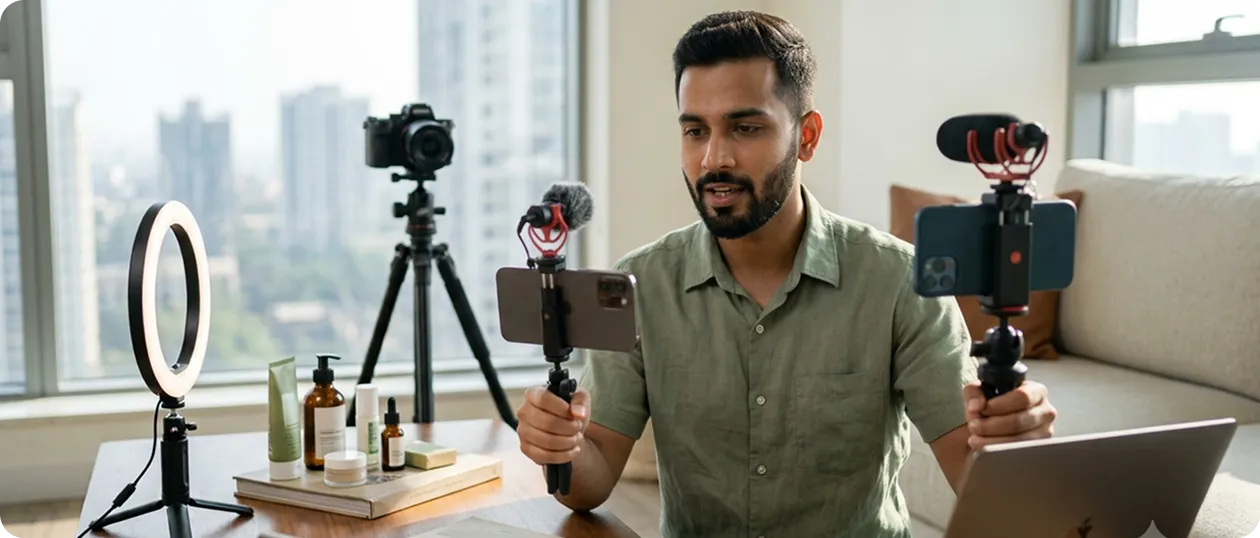
Micro influencers combine meaningful audience relationships with a broader reach than nano creators. They often specialise in specific areas such as beauty, fitness, technology, fashion, food, finance, travel, or lifestyle.
Suited For
Key Strength : Balance between targeted audience scale, relevance, and high engagement.
100K – 1M Followers

Macro influencers have established audiences and significant visibility within their respective categories. They can help brands introduce products, campaigns, and messages to a much larger audience within a relatively short campaign window.
Suited For
Key Strength : Broad reach combined with established creator recognition and professional production.
1M+ Followers

Mega influencers and celebrities provide access to exceptionally large audiences and can create substantial visibility around a campaign. Their involvement can be particularly relevant when a brand needs widespread awareness or wants to associate a campaign with a recognised public personality.
Suited For
Key Strength : Massive scale visibility and instant household name association.

Celebrity influencers include actors, musicians, athletes, television personalities, public figures, and other widely recognised individuals who have significant influence beyond social media. Their involvement can connect a campaign with an established public profile and introduce the brand to audiences across multiple channels.
Suited For
Key Strength : Broad public recognition and instant cross-platform brand authority.

Niche influencers build their presence around a highly specific subject or community. Examples include personal finance creators, automotive reviewers, SaaS experts, gaming creators, photographers, fitness coaches, parenting creators, or sustainability-focused personalities. Their audiences may be smaller than mainstream creators, but the subject relevance can be particularly valuable for specialised products.
Suited For
Key Strength : Strong contextual relevance and authority in specialized domains.

These creators are recognised primarily for their knowledge, professional experience, opinions, or expertise rather than entertainment value. They can be particularly useful when brands need to communicate complex information, establish credibility, or educate an audience.
Suited For
Key Strength : Subject-matter expertise and unmatched informational credibility.
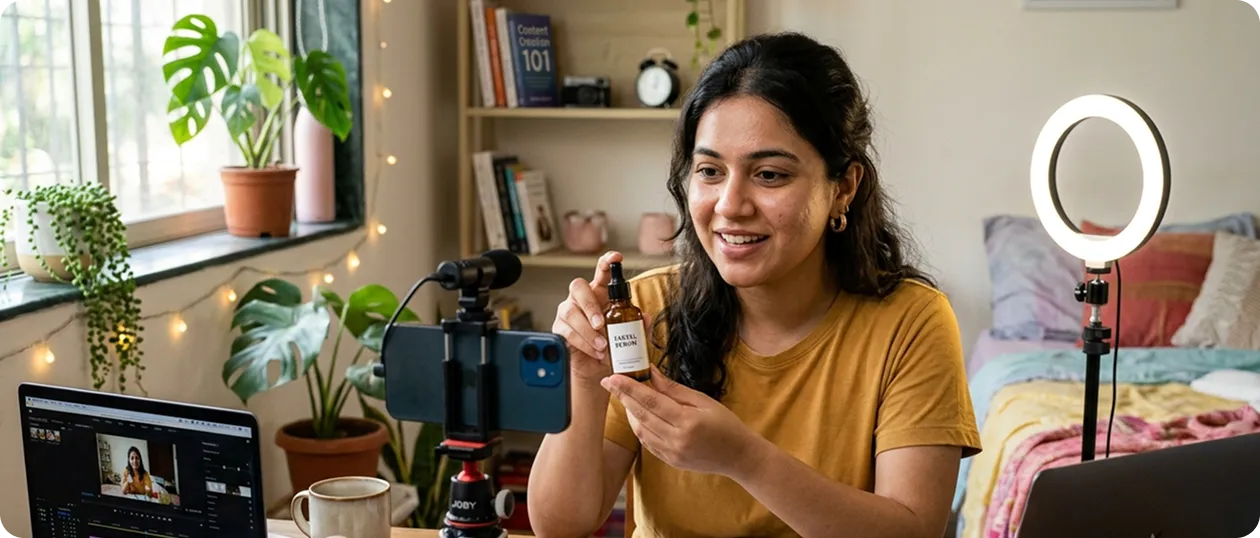
UGC creators specialise in producing brand-focused content such as product demonstrations, testimonials, tutorials, unboxing videos, lifestyle imagery, and short-form videos. Unlike traditional influencer campaigns, the primary value may come from the content itself, rather than the creator's audience size.
Suited For
Key Strength : Highly scalable, platform-native, and visually native creative assets.

Local influencers have strong relevance within a particular city, region, or community. Their influence can be especially valuable for businesses where physical location affects purchasing behaviour.
Suited For
Key Strength : Geographic relevance, local community trust, and regional influence.

These influencers operate within professional or business-focused communities. Their audiences may include decision-makers, entrepreneurs, professionals, founders, or specialised practitioners. They can be useful for brands operating in sectors where trust, expertise, and informed decision-making play an important role.
Suited For
Key Strength : Professional relevance, high B2B trust, and access to executive buyers.
Transform Your Organization Through Digital Thinking
The way people discover brands has changed.
Customers no longer depend only on advertisements, search results, or traditional media to decide what to buy. They discover products through creators, watch reviews before making decisions, compare experiences shared by other people, and often trust recommendations from personalities they already follow.
Influencer marketing sits within this broader shift in digital behaviour.
It provides brands with an opportunity to participate in conversations that are already happening.
But effective influencer marketing requires more than campaign execution.
It requires a digital-first understanding of how people discover, evaluate, discuss, and share brands.
Traditional brand communication often follows a linear model:
Brand → Advertisement → Audience
The creator becomes a bridge between the brand and the audience. Their personality, credibility, content style, audience relationship, and subject expertise all influence how the campaign is perceived.
Instead of asking:
Which influencer has the most followers?
We ask:
Which creator has the right relationship with the audience we want to reach?
Instead of:
How many posts should we publish?
We ask:
What story should the campaign tell?
Instead of:
How many views did we get?
We ask:
What happened after people saw the content?
That shift creates a more strategic approach to influencer marketing.
Data helps identify patterns that aren't always visible at first glance. It can reveal:
But data should support creative thinking rather than replace it. The strongest campaigns combine human insight with performance intelligence.
Trends move quickly. Creator formats change. Audience preferences evolve. Platforms introduce new features. Content styles rise and disappear.
A successful influencer strategy needs enough structure to protect the brand while remaining flexible enough to respond to the culture and behaviour of the audience. That balance turns influencer marketing from a one-time promotion into a repeatable growth channel.
World-Class Influencer Marketing Services
Influencer campaigns can take many forms depending on the business objective, audience, platform, and creator category.
Our influencer marketing services are designed to support the complete campaign lifecycle—from finding the right creators to managing partnerships and measuring performance.
 YouTube
Build Authority Through Long-Form Creator Content
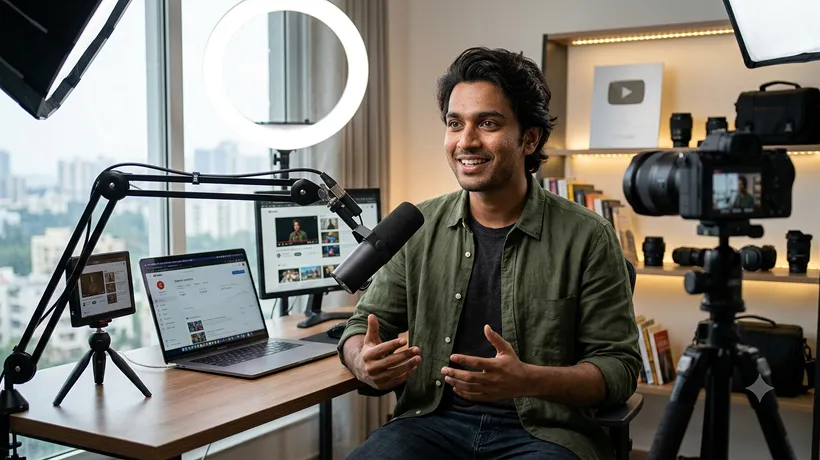
YouTube provides an environment where creators can explain, demonstrate, review, compare, and explore products in greater depth.
The value of YouTube is not simply the number of views. It is the depth of attention. A creator can demonstrate how a product works, explain its benefits, answer common questions, and integrate it naturally into a larger piece of content.
 Facebook
Create Community-Driven Brand Conversations
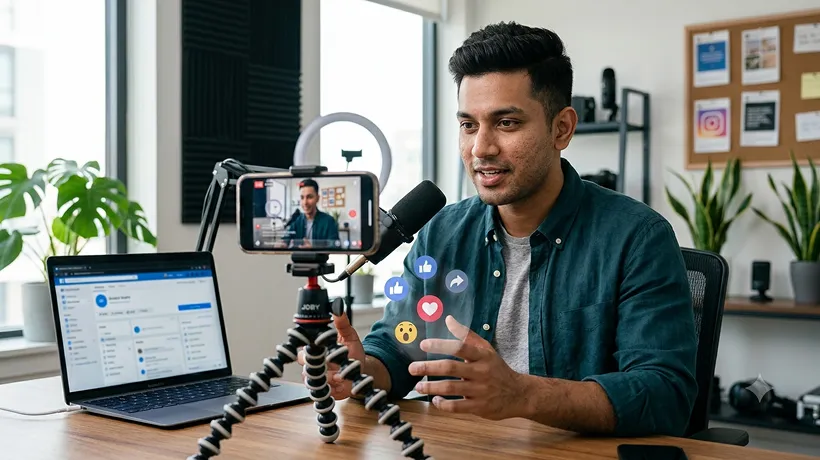
Facebook continues to provide opportunities for brands to connect with communities, niche audiences, groups, and established creator networks.
The platform can be particularly useful when the campaign requires a combination of community interaction and content distribution.
 Instagram
Turn Visual Storytelling Into Brand Discovery
Instagram is particularly suited to campaigns where visual presentation and creator personality play a central role.
Instagram allows brands to integrate products into everyday creator content while maintaining a highly visual communication style.
Finding creators is only one part. Evaluation can consider:
Each campaign begins with a clear purpose. The brief can establish:
Campaign management coordinates the moving parts behind the scenes:
Campaign performance can be measured through reach, impressions, engagement, engagement rate, video views, watch time, clicks, website traffic, leads, conversions, content performance, and audience response.
The exact metrics depend on the campaign objective.
Benefits of Hiring Our Influencer Marketing Company
Influencer marketing becomes more effective when strategy, creator relationships, content, and measurement work together.

Access a carefully selected network of creators across relevant categories and audience segments. Instead of relying purely on follower count, influencer selection considers audience relevance, content quality, engagement, geography, and campaign fit.

A creator collaboration needs a story. We develop campaign narratives that communicate the brand message while giving creators enough flexibility to maintain their own voice and content style.

Digital culture changes quickly. We monitor emerging formats, creator trends, content behaviours, and platform developments to help campaigns remain relevant without forcing brands to follow every trend.

Campaign decisions should be supported by performance information. Tracking provides visibility into reach, engagement, content performance, traffic, and other relevant campaign indicators.

Influencer marketing should be connected to a business objective. Whether the goal is awareness, engagement, traffic, lead generation, product discovery, or conversions, campaign planning should reflect the intended outcome.

Influencer behaviour differs across industries. A technology campaign requires a different creator strategy from beauty, fashion, healthcare, automotive, finance, food, or real estate.

There is no universal influencer formula. Campaign size, creator mix, content formats, platforms, timelines, and measurement should be adapted to the specific brand.

From initial strategy to final reporting, the campaign can be managed through one coordinated process, reducing the operational complexity of working with multiple creators.
Our Approach
Influencer marketing can appear simple from the outside. Find a creator. Send a product. Publish content. Measure the views. But the work behind a successful campaign is much more detailed. The right creator needs to understand the brand. The brand needs to understand the creator. The audience needs to find the partnership credible. The content needs to feel natural. The campaign needs to be managed. And the final results need to be measurable.
Contact UsWe begin with the campaign objective rather than immediately creating a creator list. Awareness, consideration, and conversion each demand different creator fits and content depth.
A creator with a large following isn't automatically the right creator. We consider who follows them, why, what content they create, how audiences respond, and whether the collaboration feels credible.
Creators know their audiences. Brands know their products. We set clear strategic guardrails while allowing creators to express the story in a way that feels native to their content.
Views and likes are useful indicators, but they don't always represent business impact. Depending on the campaign, we evaluate:
This creates a more complete picture of campaign performance.
Benefits of Hiring Our Influencer Marketing Company
A structured process makes influencer campaigns easier to manage, scale, and measure.
Understand the Brand
Establish the Campaign Strategy
Find the Right Creators
Build the Collaboration
Bring the Campaign to Life
Understand the Impact
Creator Selection
Creator selection is one of the most important decisions in an influencer campaign. A large audience can provide scale, but scale without relevance can create inefficient reach. A highly relevant creator may have a smaller audience but significantly stronger credibility within a particular niche.

Does the creator reach the people the brand actually wants to communicate with?

Does the creator naturally produce content relevant to the product or category?

Does the audience actively interact with the content?

Is the creator's audience concentrated in the locations that matter to the business?

Often useful for niche communities and focused audience engagement.
Can provide a balance between audience size and category relevance.
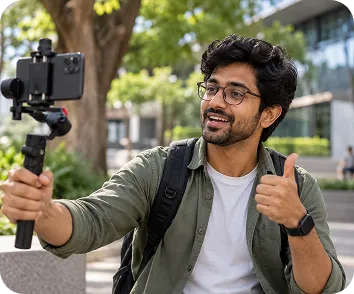
Useful when broader reach and awareness are major campaign objectives

Can provide substantial visibility where campaign scale, brand association
Influencer Content & Creative Direction
Influencer marketing works best when creators are not simply given a product and asked to “post about it.” They need a reason to tell the story. That story can take many forms.
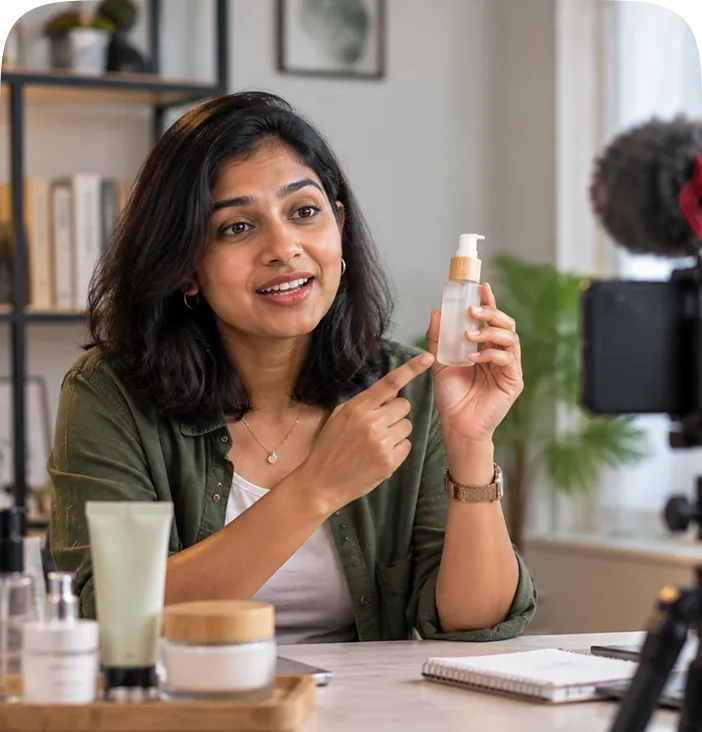
Creators show the product in use, point out the details that matter and explain why it earns a place in their routine.

Teach your audience something useful. Tips, how-tos and explainers build trust while the product solves the problem on screen.

The first reveal, captured honestly. Packaging, first impressions and genuine reactions make viewers want to open one too.
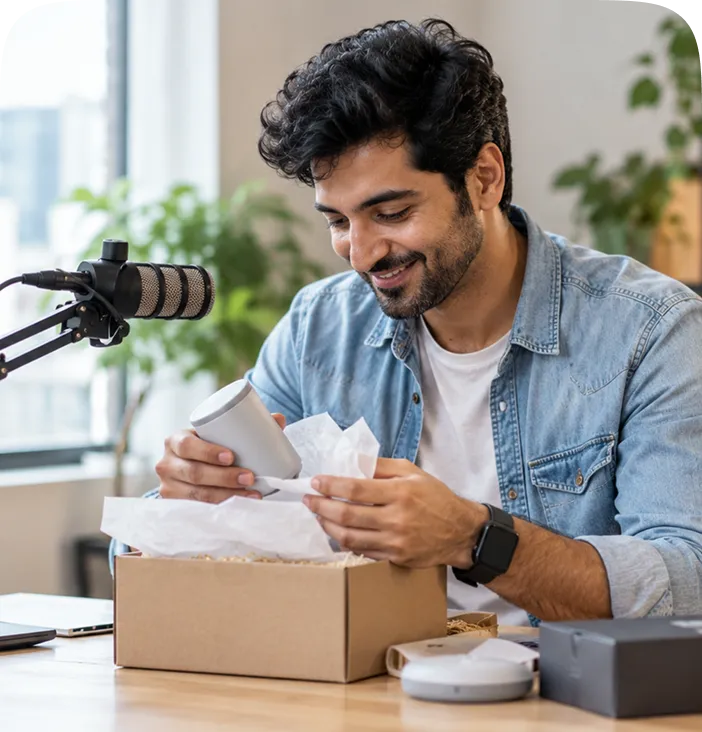
Real words from real users. Creators share their results and experience in their own voice, which makes the proof believable.
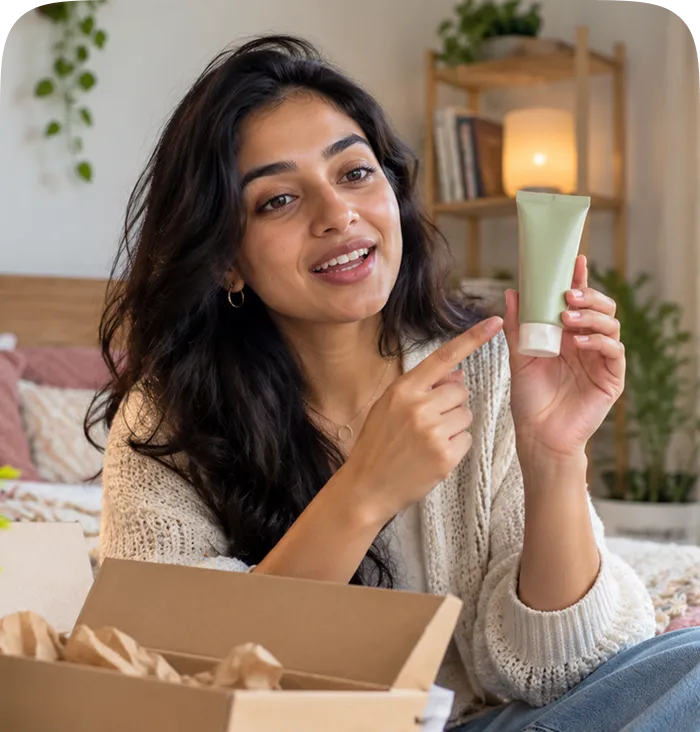
Native, unpolished and shot like a friend’s post. UGC-style creative blends into the feed and feels trustworthy.
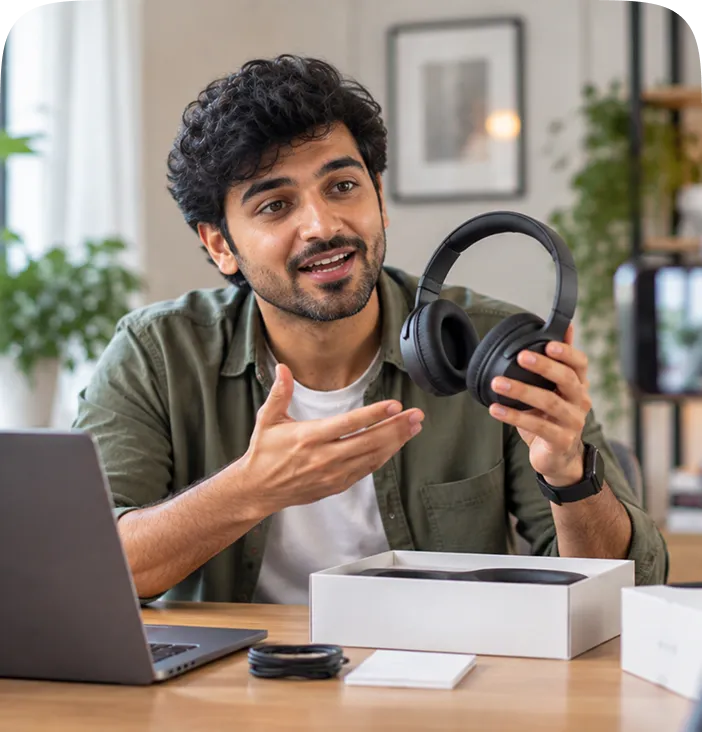
Honest, detailed reviews after real use. Pros, trade-offs and the overall experience help buyers decide with confidence.

Give the creator a narrative to follow: a problem, a turning point and a result. The product becomes part of the story.

Step-by-step walkthroughs that show exactly how to get the most from the product, from setup to final result.
Platforms & Campaign Formats
Different platforms encourage different forms of creator communication.

Strong for visually led consumer categories, lifestyle content, fashion, beauty, food, travel, fitness, and product discovery.
Useful when audiences need more information before making a decision.

Useful for established communities and audiences that actively interact with brand and creator content.

Useful for technology, SaaS, professional services, business solutions, and industry-focused campaigns.
Short-form content can be useful for:
The objective is not to be present everywhere. The objective is to be present where the relevant audience is most likely to engage. A campaign can therefore use one platform or combine several.
Influencer Marketing for Different Industries
The creator ecosystem looks different from one category to another.
Creators can demonstrate products through styling, tutorials, reviews, transformations, routines, and lifestyle content.
Campaign Objectives
Awareness · Product Discovery · Engagement · SalesInfluencers can turn products and dining experiences into visual, experiential content.
Campaign Objectives
Discovery · Footfall · Orders · Product AwarenessTechnology creators can simplify complex products through reviews, demonstrations, comparisons, and educational content.
Campaign Objectives
Awareness · Consideration · Product Education · LeadsCreator partnerships can focus on education, routines, experiences, and lifestyle storytelling while maintaining appropriate communication standards.
Campaign Objectives
Awareness · Education · Trust · EngagementTravel creators can showcase destinations, properties, experiences, itineraries, and hospitality services.
Campaign Objectives
Discovery · Bookings · Awareness · Experience PromotionCreators can demonstrate products in real-world contexts.
Campaign Objectives
Product Discovery · Traffic · Conversions · SalesCreators can help explain complex financial concepts and products in more accessible language, subject to appropriate compliance and communication requirements.
Campaign Objectives
Education · Awareness · Consideration · Lead GenerationCreator partnerships can focus on education, routines, experiences, and lifestyle storytelling while maintaining appropriate communication standards.
Campaign Objectives
Awareness · Enquiries · Test Drives · Product ConsiderationCreators can communicate course experiences, learning opportunities, career pathways, and educational products.
Campaign Objectives
Awareness · Enquiries · Applications · AdmissionsCampaign Measurement & Analytics
Influencer marketing needs measurement that reflects the original campaign objective. If the objective is awareness, reach and impressions may be important. If the objective is engagement, interaction quality matters. If the objective is traffic, clicks and website behaviour become more relevant. If the objective is sales, conversion and revenue metrics become central.
Performance can also be evaluated creator by creator.
This can help answer:
The campaign can then be viewed as a complete system.
Why Work With an Influencer Marketing Agency?
Managing influencer campaigns internally can quickly become operationally complex. One campaign may involve:

Influencer marketing should feel simple to the brand. Behind that simplicity is a coordinated process involving:
That operational layer is what allows campaigns to scale without creating unnecessary complexity for the internal marketing team.
Experience Actionable Strategies
Every brand has a different audience. Every campaign has a different objective. Every creator has a different relationship with their community. That is why influencer marketing should never be built from a fixed template. We create strategies around your:
Whether you are launching a product, entering a new market, building awareness, generating leads, driving sales, or creating a long-term creator network, the strategy can be built around what you actually need to achieve.
Contact Us
FAQ
The first step is defining the campaign objective and audience. From there, the strategy can determine which platforms, creator categories, content formats, timelines, and measurement criteria are appropriate. The campaign can then move through influencer discovery, vetting, briefing, negotiation, content creation, approval, publishing, and performance tracking.
Influencer marketing KPIs depend on the campaign objective. Common metrics include:
Success should be measured against the original campaign objective. For an awareness campaign, reach and visibility may be important. For an engagement campaign, interactions and audience response may matter more. For a conversion campaign, clicks, leads, sales, and revenue become more relevant.
Influencer selection can consider audience demographics, geography, content category, engagement, creator credibility, previous collaborations, content quality, and overall brand fit. Follower count is only one part of the evaluation.
Authenticity can be evaluated through audience patterns, content behaviour, engagement quality, previous collaborations, audience relevance, and consistency between the creator and the category. The creator should also have a natural connection to the type of product or subject being promoted.
Yes. Campaigns can be structured across multiple platforms when doing so supports the target audience and campaign objectives. Each platform can have a different content role rather than simply duplicating the same content everywhere.
Timelines depend on the number of creators, campaign scope, content requirements, approval cycles, negotiation, and publishing schedule. A smaller campaign may be completed relatively quickly, while a larger multi-creator campaign may require several weeks of planning and execution.
Yes. Influencer campaigns can include content strategy, creative briefs, creator coordination, content review, revisions, approval workflows, and publishing coordination.
Yes. Micro influencers can be valuable when a campaign requires niche audiences, strong community relevance, local reach, or category-specific credibility. The right creator tier depends on the campaign objective.
Yes. Campaigns can be structured across different Indian markets and international audiences depending on the campaign requirements.
It can support sales when the campaign is designed around appropriate products, audiences, creators, content, calls to action, landing experiences, and measurement. However, the role of influencer marketing can vary significantly depending on the customer journey and product category.
Campaign cost depends on the number and type of influencers, platform, content formats, deliverables, audience size, production requirements, campaign duration, usage rights, and overall scope. A campaign should therefore be budgeted according to the desired outcome rather than relying on a single standard package.
The right creator can introduce your brand to an audience that already trusts their voice. The right strategy can turn that introduction into meaningful engagement. The right content can make your product part of an authentic conversation. And the right measurement framework can turn those interactions into useful business intelligence. From influencer discovery to campaign strategy, from creative collaboration to performance reporting, every part of the campaign can be built around your brand’s objectives.
Let’s Build Your Next Influencer Campaign
Your brand, audience, product, campaign goal, target market, budget and timeline.
Start Your Influencer Marketing Campaign Get an Influencer Strategy